By ResumePro™ Editorial Team. Career-search guidance reviewed against ResumePro™'s ATS scoring data and hiring-manager feedback.
Best Resume Builder of 2026? What People Are Actually Using Now
The best resume builder in 2026 is not just a template tool. See what job seekers actually use to create ATS-ready resumes faster.

The best resume builder of 2026 is not simply the one with the nicest templates. Job seekers now expect a tool that can tailor a resume to a specific job, pass applicant tracking systems, generate a strong cover letter, and still sound like a real person. The shift is clear: people are moving away from generic one-page template makers and toward AI-assisted resume platforms that combine structure, keyword guidance, and practical editing support. Here is what candidates are actually using now—and how to choose the right resume builder for your search.
1. What Makes a Resume Builder “Best” in 2026?
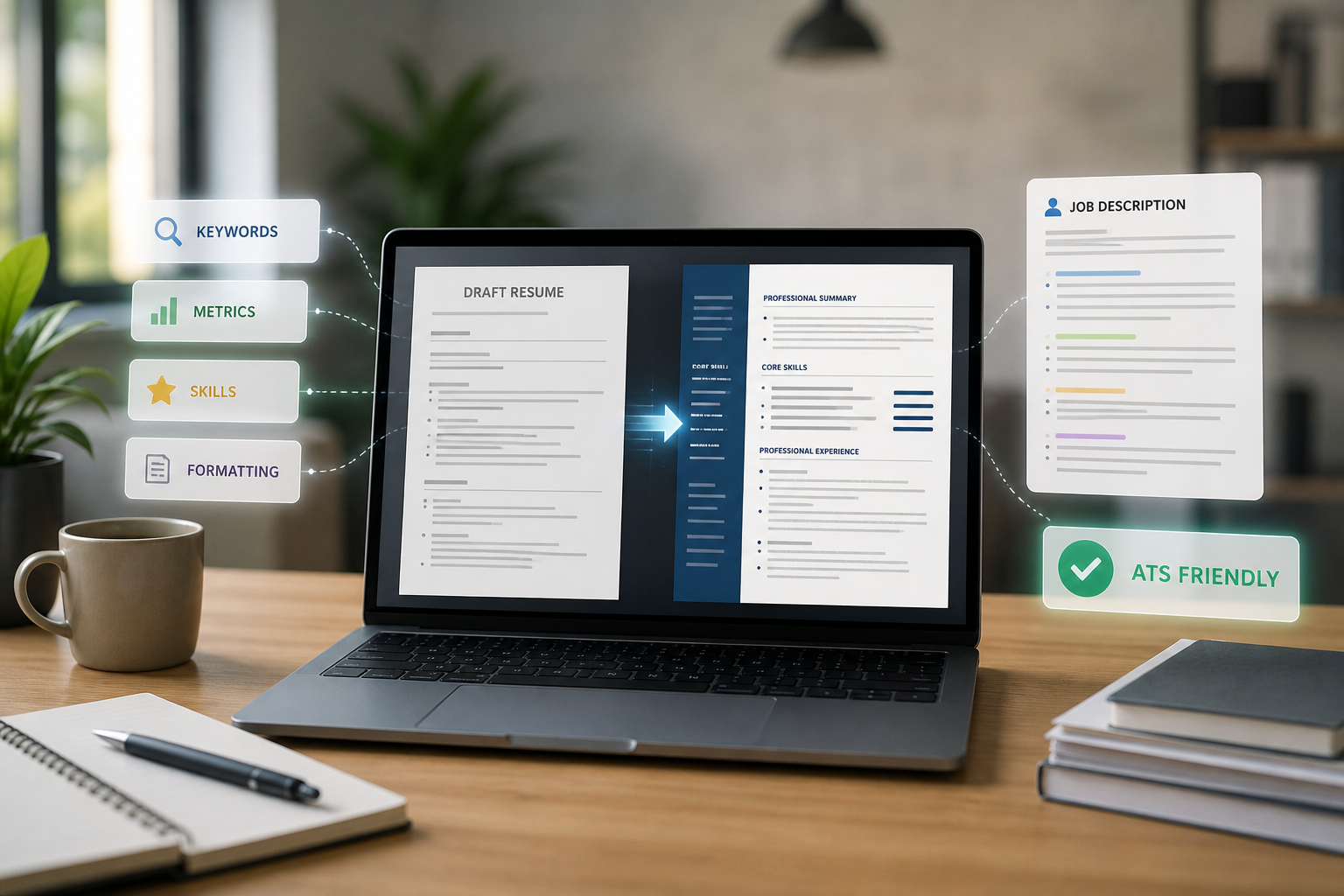
A few years ago, most resume builders competed on templates. The pitch was simple: pick a design, fill in your experience, download a PDF. In 2026, that is no longer enough.
The best resume builder now needs to solve three bigger problems:
- Can your resume get through ATS software? Many employers still use applicant tracking systems to parse resumes, rank candidates, or filter applications. If your layout has unreadable columns, graphics, icons, or unusual formatting, your qualifications may not be captured correctly.
- Can it tailor your resume to a specific job? A general resume is usually weaker than one aligned with the job description. Strong tools now identify relevant keywords, skills, responsibilities, and measurable achievements for each application.
- Can it improve your content without making it generic? AI can help rewrite bullets, but poor AI output sounds inflated or vague. A good builder helps you write clearly, with action verbs, metrics, and role-specific language.
For example, a weak resume bullet might say:
Responsible for customer service and team support.
A stronger version would be:
Resolved 40+ customer inquiries per day while maintaining a 96% satisfaction score and supporting onboarding for 3 new team members.
That improvement matters more than a decorative template. In 2026, job seekers are choosing tools that help them explain impact, not just format a document.
The best resume builder should also support multiple versions. A project manager applying to SaaS, healthcare, and logistics roles may need three different resumes with different keywords and achievement emphasis. Modern job seekers want speed, but they also need control.
2. What People Are Actually Using Now

People are not all using resume builders the same way. In 2026, most serious job seekers combine a few practical features: AI drafting, ATS formatting, keyword matching, LinkedIn imports, and cover letter generation.
Here are the main categories people are using:
AI resume builders. These tools help turn rough notes into stronger resume sections. They are popular because many candidates know what they did at work but struggle to write it in resume language. The best AI builders ask for context, such as job title, industry, tools used, and measurable outcomes.
ATS resume checkers. Job seekers use these to test whether their resume can be parsed cleanly and whether it includes enough relevant keywords from the job posting. This is especially common for competitive fields like tech, finance, healthcare, operations, and marketing.
Template-based builders. These are still useful, especially for students, entry-level candidates, and people who need a clean resume quickly. But users are becoming more cautious about overly designed templates. Simple, single-column formats are winning.
Cover letter generators. Cover letters are not dead. Many candidates use generators to create a first draft, then edit it to sound more personal. This is helpful when applying to roles where motivation, career change, or company fit matters.
LinkedIn-to-resume tools. These save time, but they usually need editing. LinkedIn profiles are often broader and more conversational, while resumes should be targeted and concise.
A practical workflow looks like this: import your background, choose an ATS-friendly layout, paste in the job description, tailor your bullet points, generate a matching cover letter, then review everything for accuracy and tone. Tools like AskResumePro are designed around this modern workflow: build quickly, optimize for ATS, and customize for each role without rewriting from zero.
3. How to Choose the Right Resume Builder for Your Situation

There is no single best resume builder for every person. The right tool depends on your job search.
If you are a student or recent graduate, look for a builder that helps with education, internships, projects, coursework, and entry-level skills. You may not have years of experience, so the tool should help you frame class projects, volunteer work, part-time jobs, and campus leadership in a professional way.
If you are a mid-career professional, choose a builder that focuses on measurable achievements. Your resume should not read like a job description. It should show results: revenue increased, costs reduced, processes improved, customers retained, projects delivered, or teams led.
If you are a career changer, you need tailoring features. A builder should help translate your current experience into the language of your target role. For example, a teacher moving into customer success can highlight stakeholder communication, training, documentation, conflict resolution, and adoption metrics.
If you are an executive or senior leader, be careful with generic AI. Senior resumes need strategic positioning, not just rewritten bullets. Look for tools that allow customization around leadership scope, business outcomes, transformation, budgets, board interaction, and market expansion.
Before choosing a resume builder, ask these questions:
- Does it create ATS-friendly layouts?
- Can I tailor my resume to a job description?
- Does it help write specific, measurable bullet points?
- Can I edit the tone so it sounds like me?
- Does it support cover letters?
- Can I export clean PDF and Word versions?
- Is pricing clear before I invest time?
A good resume builder should save time, but it should not remove your judgment. You still need to verify facts, add real numbers, and make sure every claim is accurate. The strongest results come from combining smart software with honest, specific career details.
4. The Bottom Line: The Best Resume Builder Is the One That Helps You Apply Better
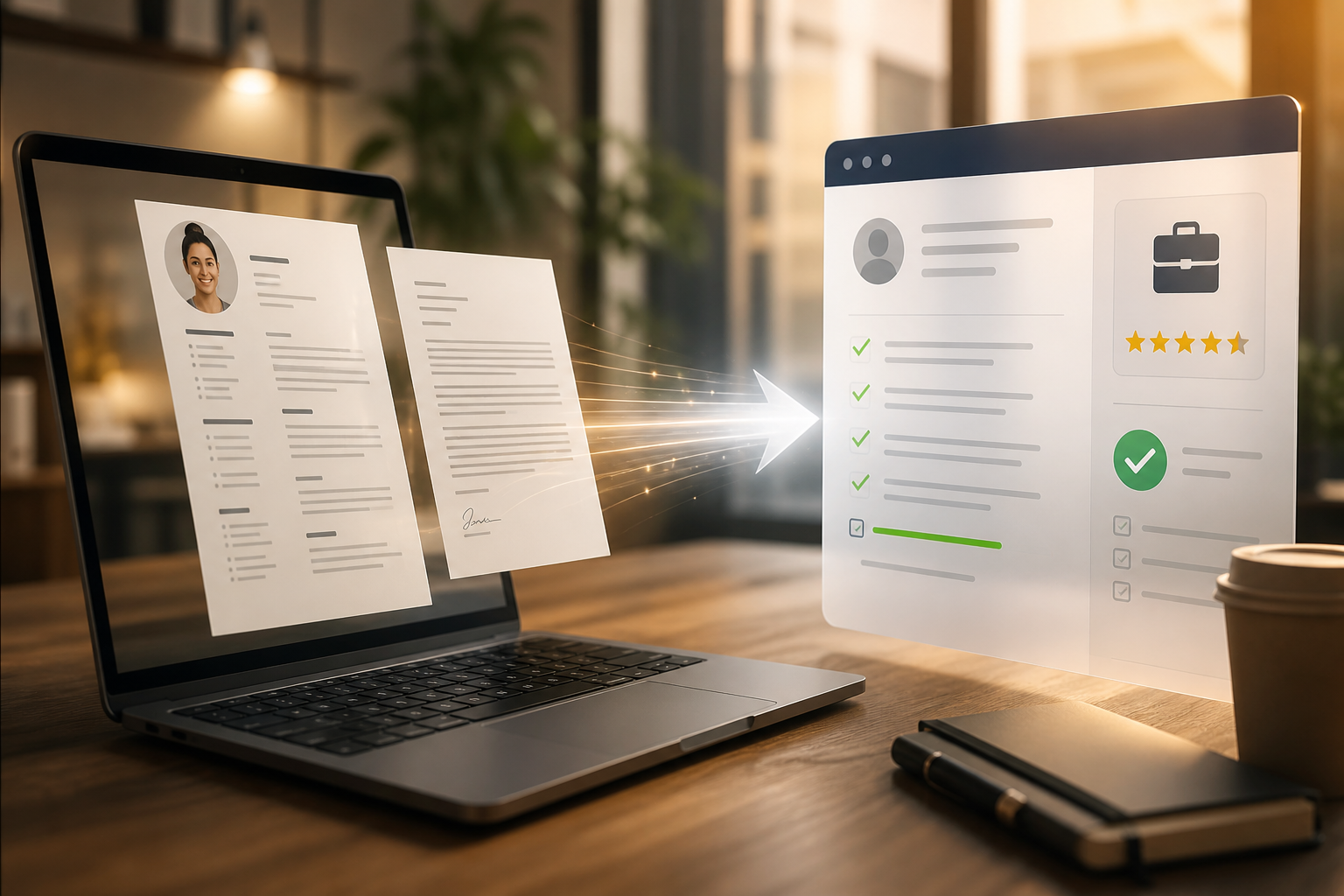
The best resume builder of 2026 is the one that helps you submit better applications—not just prettier resumes.
A strong tool should help you answer the employer’s real question: Can this person do the job well? That means your resume needs to connect your experience to the role clearly and quickly.
For most job seekers, the winning formula is:
- Use a clean ATS-friendly format. Avoid complex graphics, text boxes, heavy columns, and icons that may confuse parsing systems.
- Start with a strong base resume. Build one complete version with your best achievements, skills, education, certifications, and tools.
- Tailor for each target role. Adjust your summary, skills, and bullets based on the job description.
- Use AI for drafts, not final truth. Let AI suggest wording, but confirm that every detail is accurate.
- Pair the resume with a focused cover letter. Use the cover letter to explain fit, motivation, career transitions, or standout achievements.
This is where AskResumePro fits well: it helps job seekers create ATS-optimized resumes and cover letters without getting stuck on formatting or blank-page writing. Instead of guessing which keywords matter or rewriting every bullet manually, candidates can create focused application materials faster.
Still, the tool is only part of the process. The best resume builder cannot replace strong evidence. If you can add numbers, add them. If you led a project, explain the scope. If you improved a process, show the before and after. If you used specific tools—Salesforce, Excel, Python, QuickBooks, Tableau, Jira, HubSpot, Epic, Workday—include the ones that match the role.
In 2026, people are using resume builders to work smarter. The candidates getting the best results are not sending the same resume everywhere. They are using modern tools to tailor, polish, and apply with more confidence.
More comparisons: Resume Worded vs. AI resume tailoring, ChatGPT for resumes vs. a purpose-built tool, and free vs. paid resume scanners. See how it works and pricing for what we do.
Before you commit to any of them, run a baseline with the ATS resume checker, and read is an ATS resume checker worth it plus what a good ATS score actually means so you know how to read the number you get back.
Frequently Asked Questions
What is the best resume builder in 2026?
The best resume builder in 2026 is one that offers ATS-friendly formatting, AI writing support, job description tailoring, keyword guidance, and cover letter creation. The right choice depends on your career level and job search goals.
Are AI resume builders worth it?
Yes, AI resume builders can be worth it if they help you write clearer, more targeted bullet points and save time. You should still review every sentence for accuracy and add real metrics where possible.
Do resume builders help with ATS?
Good resume builders help with ATS by using clean layouts, standard section headings, readable fonts, and keyword alignment. Avoid overly visual templates with graphics, icons, and complex columns.
Should I use the same resume for every job?
No. A base resume is useful, but you should tailor your summary, skills, and selected achievements to each role. Even small changes based on the job description can improve relevance.
Related articles
Resume Tools
Jobscan Alternatives in 2026: What to Use Instead
Jobscan popularized the resume match score. Here is how the main alternatives compare in 2026, and how to pick the one that matches how you actually apply.
Resume Tools
Teal vs. Kickresume vs. AskResumePro: Honest Comparison
Three tools, three different problems: pipeline tracking, document design, and per-job tailoring. Here is which one matches your actual bottleneck.
Resume Tools
Resume Worded vs. AI Resume Tailoring (2026 Comparison)
Resume Worded grades your resume once. An AI tailoring tool rewrites it per job posting. Here is what each one is accurate about, and which you need.